
Are you feeling buried by debt and not sure where to turn? You’re not alone, many Californians face overwhelming financial pressure due to unexpected events, job loss, or medical expenses. It’s common to feel anxious or uncertain about what comes next. Bankruptcy isn’t just a word you hear on TV: it can be a real, powerful tool to help you get a fresh start and regain control of your life. But you might wonder: What are my options? Who can guide me through this maze? And how do I know if bankruptcy is the right solution for my situation?
This guide breaks down each step, so you can make confident, informed decisions about your financial future.
Key Takeaways
- California bankruptcy filing help provides a legal pathway to regain financial control during overwhelming debt.
- Many Californians choose Chapter 7 or Chapter 13 bankruptcy, each offering different options for debt relief or repayment plans.
- Eligibility for bankruptcy in California depends on income, debt type, and state-specific exemption laws.
- Gathering thorough financial documentation and completing mandatory credit counseling are essential early steps in the filing process.
- Avoid common mistakes like omitting debts, transferring property before filing, or missing deadlines to ensure a smoother bankruptcy process.
- Consulting with an experienced bankruptcy attorney can simplify the process and improve your chances of achieving a fresh financial start.
Understanding Bankruptcy in California
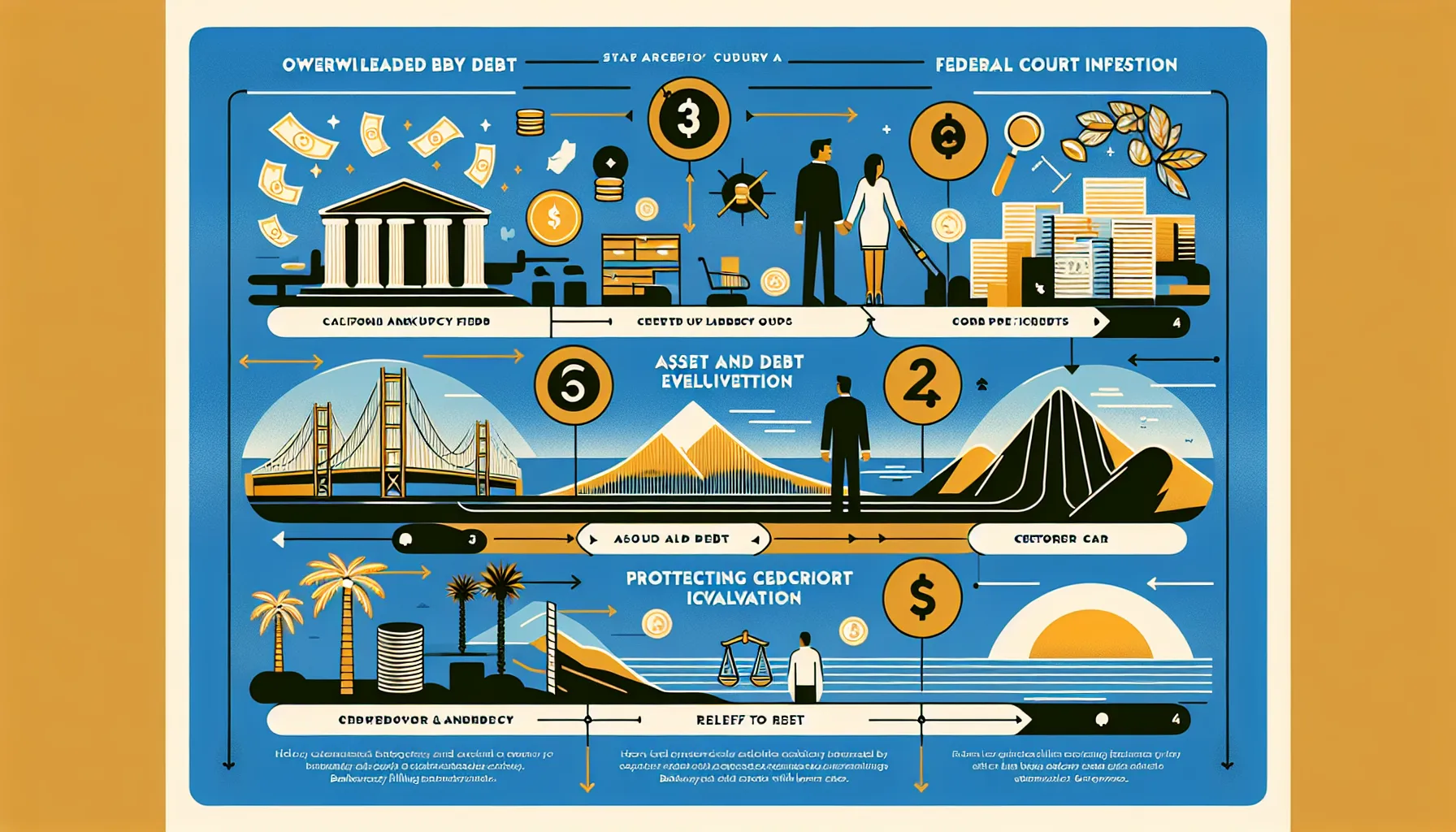
California bankruptcy filing process illustrated step by step.
Bankruptcy is a legal process designed to help individuals and businesses eliminate or repay debt under the protection of the federal court. In California, bankruptcy can offer a path to financial relief when bills and creditors seem unmanageable.
The process involves a court assessment of your assets, debts, and income. The court seeks to balance your need for relief against the rights of your creditors. But at its core, bankruptcy gives you a chance to press reset, stop collection calls, and even save your home or car in certain cases.
Bankruptcy is not the end. For many, it’s the beginning of a more manageable and hopeful chapter. If you’ve ever wondered if filing is right for you, or you’re worried about the stigma, know that the law exists to help honest people who’ve hit hard times. Are you ready to explore what this process could mean for you?
Types of Bankruptcy Available in California
There are several types of bankruptcy, but most individuals in California consider Chapter 7 or Chapter 13. Each route serves a different purpose and fits various financial situations.
Chapter 7: Liquidation
Chapter 7 is often called “straight bankruptcy.” It allows you to discharge, or wipe out, many types of unsecured debt such as credit cards, medical bills, and personal loans. Although some property might be sold to repay creditors, California law protects certain assets through exemptions. Many filers keep most of their property.
Chapter 13: Repayment Plan
Chapter 13 is designed for people with steady income who want to protect assets from foreclosure or repossession. Instead of erasing debt outright, Chapter 13 organizes it into a payment plan, typically three to five years, making it easier to catch up on missed payments, like a mortgage or car loan, without losing your property.
Other Types
There is also Chapter 11 (most often used by businesses or individuals with significant assets and debts) and Chapter 12 (for farmers and fishermen). But for most everyday people, Chapter 7 and 13 are the starting points.
Do you see yourself needing to completely wipe out debt, or just need breathing room while you repay? Knowing the differences can help you aim for the right solution.
Eligibility Requirements and Key Considerations
Not everyone qualifies for every type of bankruptcy. California, like other states, follows both federal rules and unique state guidelines.
Chapter 7 Eligibility
Your income must fall beneath a certain threshold based on the California means test, which compares your household income to the state median. If you earn too much, you may be directed to Chapter 13 instead. Certain debts, such as student loans, recent taxes, or support obligations, might not be wiped out.
Chapter 13 Eligibility
Filers must have regular income and keep debts within specific limits (updated regularly by federal law). Chapter 13 is often a strong choice if you’re facing foreclosure or trying to keep valuable property while catching up on overdue payments.
Key Considerations
- Some assets are shielded by California’s exemption laws: these offer protection for necessities like your home, car, retirement accounts, and some personal belongings.
- The type of debt you have matters, secured, unsecured, priority, or non-dischargeable.
- Previous bankruptcy filings: If you’ve filed within the last several years, you may need to wait before filing again.
Are you wondering which chapter fits your income and assets? Or how a previous filing might affect you? These questions are important to discuss with a bankruptcy attorney.
The Bankruptcy Filing Process Step by Step
While filing can seem complicated at first glance, breaking it down into steps can make it more approachable.
- Consultation: Speak with a bankruptcy attorney to review your financial situation and determine the best path forward.
- Credit Counseling: Before filing, you’re required to complete a credit counseling session from an approved agency.
- Preparing the Petition: Gather all your financial information, including debts, income, property, and expenses. Your attorney will help you fill out detailed forms for the court.
- Filing with the Court: Your completed petition is filed in your local bankruptcy court. This step triggers an automatic stay, which immediately stops collection efforts, lawsuits, foreclosure, and wage garnishments.
- Trustee Appointment and Meeting: The court assigns a trustee who will review your case. You’ll attend a meeting (called a 341 meeting) where the trustee asks straightforward questions about your finances and petition.
- Resolution: Depending on your chapter, your case may end with discharged debts (Chapter 7) or court approval of your repayment plan (Chapter 13).
Throughout this process, having the right legal support can lift a weight from your shoulders. Are you wondering how each stage will apply to your life? A professional can answer these questions and help you feel more confident.
Documents and Information Needed to File in California
Gathering paperwork for bankruptcy might sound overwhelming, but having a clear list makes it more manageable. Here’s what you’ll typically need:
- Income documentation (pay stubs, business income, Social Security, etc.)
- Tax returns from the past two years
- Recent bank statements
- Statements for all debts (credit cards, loans, collection notices)
- Asset listings (cars, home, retirement accounts, valuables)
- Monthly expense information (rent or mortgage, utilities, medical costs, food, transportation)
- Property records (deeds, car titles)
- Any court judgments or legal documents related to your debts
Get these documents ready as soon as possible, they give your attorney everything needed to build a strong case. Are you missing something on this list or unsure how to find it? That’s one reason professional bankruptcy help makes things smoother: experienced attorneys know what to look for and how to present it.
Common Challenges and Mistakes to Avoid
Bankruptcy helps thousands start fresh each year, but mistakes along the way can cause unnecessary headaches. Being aware of common pitfalls helps you steer clear of trouble.
- Not listing all debts or assets: Leaving out any creditors or income, even by accident, can delay your case or put your discharge at risk.
- Transferring property before filing: Giving away or selling valuable items before you file can raise red flags and may cause the court to reverse those transfers.
- Waiting too long to seek help: Many wait until wage garnishments or foreclosure are just days away. Early legal advice can often protect more of your assets.
- Missing credit counseling or court deadlines: Required education sessions and paperwork must be done on time. Missing just one can delay or derail your case.
- Taking on more debt just before filing: Running up credit cards or taking new loans right before bankruptcy can harm your case and, in some instances, be viewed as fraud.
Every situation is different. But do any of these common issues feel familiar? If so, you’re definitely not alone. Honest answers, careful planning, and advice from an experienced attorney can make all the difference.
Conclusion
Financial pressure doesn’t have to define your future. Filing for bankruptcy in California is a real option when debt becomes unmanageable, and you deserve clear, accessible support throughout the process. With the right information and professional guidance, you’re taking meaningful steps toward stability and relief. Do you feel ready to discuss your options or ask questions about what comes next? Reaching out to an experienced bankruptcy attorney can help you move forward with confidence and peace of mind.
Frequently Asked Questions about California Bankruptcy Filing Help
What is bankruptcy, and how does it help Californians with debt?
Bankruptcy is a legal process designed to help individuals and businesses eliminate or restructure debt under federal court protection. In California, it offers relief by stopping collection actions, such as foreclosure or wage garnishments, and may allow you to wipe out or reorganize your debts for a fresh start.
What are the main types of bankruptcy for individuals in California?
The main types of bankruptcy for individuals in California are Chapter 7 and Chapter 13. Chapter 7 allows you to discharge most unsecured debts, while Chapter 13 is a repayment plan for people with steady income who want to keep assets like a home or car and catch up on missed payments.
What documents do I need to file for bankruptcy in California?
To file for bankruptcy in California, you need to gather income documentation, tax returns, recent bank statements, lists of all debts, asset listings, monthly expenses, property records, and any legal documents related to debts. Having these ready makes the process smoother and helps your attorney build a strong case.
Who qualifies to file for bankruptcy in California, and what are the eligibility requirements?
Eligibility depends on your income, debt type, and recent bankruptcy filings. For Chapter 7, your income must pass the California means test. Chapter 13 requires regular income and debts below certain limits. Some debts, like student loans or recent taxes, may not be discharged.
How long does the bankruptcy process take in California?
Filing for Chapter 7 bankruptcy in California typically takes about three to six months from start to discharge. Chapter 13 cases last three to five years due to the repayment plan. Timelines can vary depending on your situation and whether you meet all deadlines.
Can filing for bankruptcy stop foreclosure or wage garnishment in California?
Yes, filing for bankruptcy in California triggers an automatic stay, which immediately stops foreclosure, collection calls, lawsuits, and wage garnishments. This legal protection gives you time to work out your financial situation and protect important assets while going through the bankruptcy process.